
Field Guide & Infrastructure Reality
The Middle Tennessee Soil, Perc Test & Septic Guide
A note from Chris: When my family relocated to our property, nobody took the time to explain how rural waste systems or local soil variations functioned. We felt completely rushed through the transaction, closing on a major investment without understanding the terrain under our feet. I built this plain-English guide because you deserve total transparency—not a rushed corporate sales pitch.
What Actually is a “Perc” Test?
A percolation (perc) test measures how quickly raw water drains through a property’s soil layers. In Southern Middle Tennessee, our geography ranges from deep, rich tillable ground to dense, shallow limestone shelves. Before county health departments will issue a single residential building or renovation permit, an independent soil scientist must physically map your land’s absorption rates.
If you purchase a property assuming a standard home can go anywhere on the parcel, you are rolling the dice. A failed perc report means the soil retains water too long, which dictates exactly what type of waste system your footprint requires.
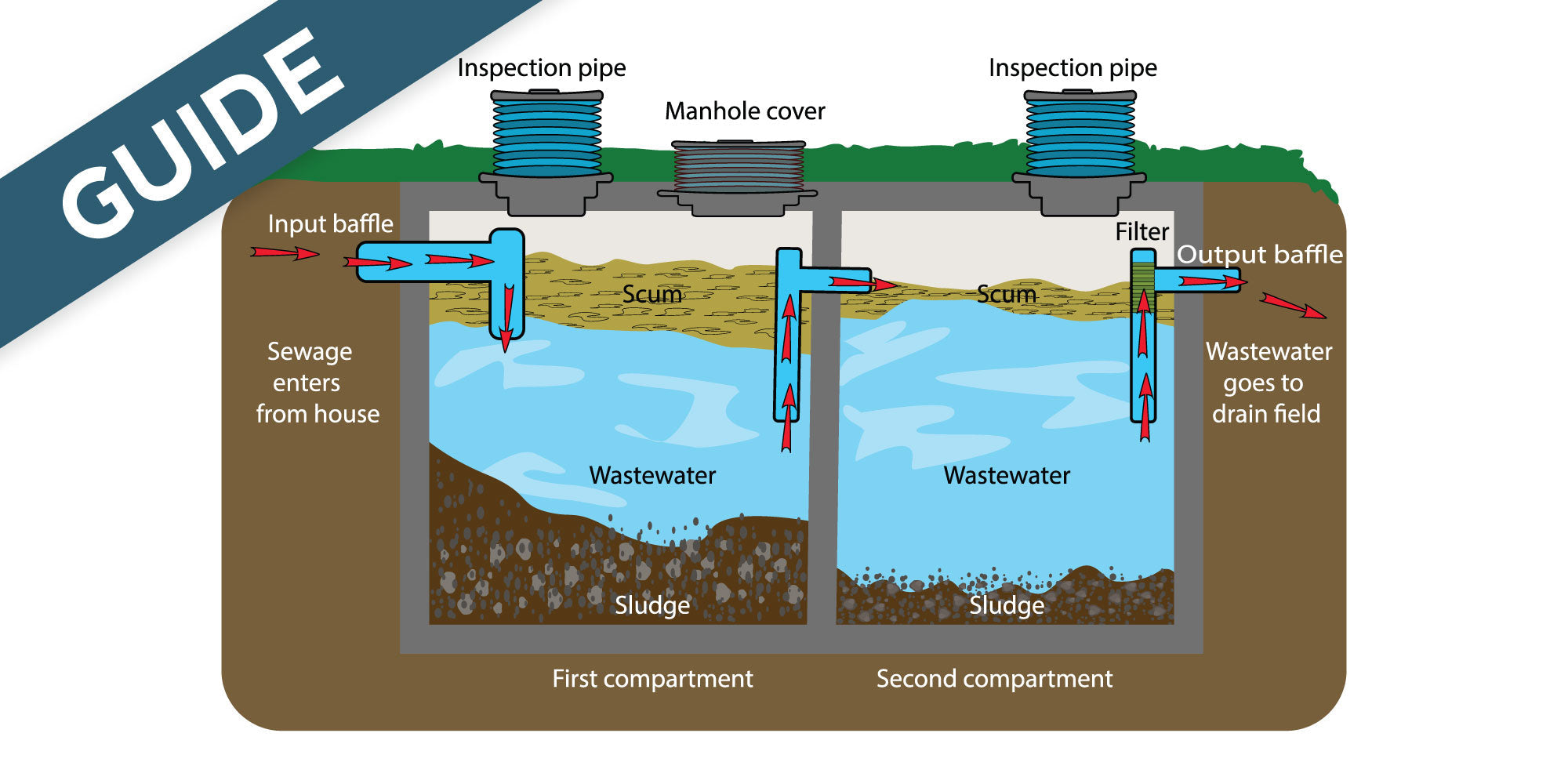
Inside a Conventional Waste Infrastructure Layout
When reviewing property lines, look out for the exact layout of the first compartment, second compartment, and output baffles. If a system is neglected, solid layers can compromise your entire field layout.
The Financial Reality: Conventional vs. Engineered
The structural outcome of your soil mapping determines your infrastructure budget. Missing this step during your due diligence window can completely wreck your property planning math.
Conventional Gravity System
Est Cost: $4,000 – $7,500The ideal scenario. Your soil contains deep, well-draining layers. Waste moves completely via natural gravity fields through a standard tank out to sub-surface gravel trenches. Low-maintenance, cost-effective, and easy to service over decades.
Engineered / Alternative Mound
Est Cost: $15,000 – $25,000+Required when shallow limestone shelves or dense clay structures fail gravity testing. An engineer must design an artificial sand mound system completely above ground, utilizing heavy-duty electric pumps to distribute effluent evenly. High structural costs, mechanical dependency, and strict spacing restrictions.
I Am Upfront About the Limits of My Job
I do not pretend to be a certified soil scientist or environmental civil engineer. But after years of managing land transactions across Maury, Giles, and Lawrence counties, I know exactly who to call. If we spot an anomaly on an old county registry map, I won’t guess—I will put the top local specialized technicians on the job to verify the dirt before you lock down your capital.
Need a Property Map Analyzed?
If you are tracking a small-town home or country tract on the market and want an honest set of eyes to audit its existing county map records or utility history, let’s look at it together.